
The underground world is a complex and often invisible ecosystem, where the mole reigns as a true engineer. These creatures, far from being mere residents of the black earth, have developed astonishing physiological adaptations to thrive in a dark and confined environment. Their growth, from juvenile stages to adulthood, reflects a remarkable evolution shaped by the necessity to dig, hunt, and navigate in complete darkness. Their life, dictated by silence and obscurity, raises many questions about their behavior, diet, and impact on soil structure.
The Secrets of Moles’ Adaptation to Underground Life
Adapted to a hostile underground environment in many ways, moles have developed remarkable survival strategies. Their bodies, designed for the incessant digging of underground tunnels, testify to a unique evolution dictated by the characteristics of their habitat. Although they are nearly blind, these small creatures compensate for this deficit with a highly developed sense of smell and hearing, allowing them to detect earthworms and insects that make up their main diet.
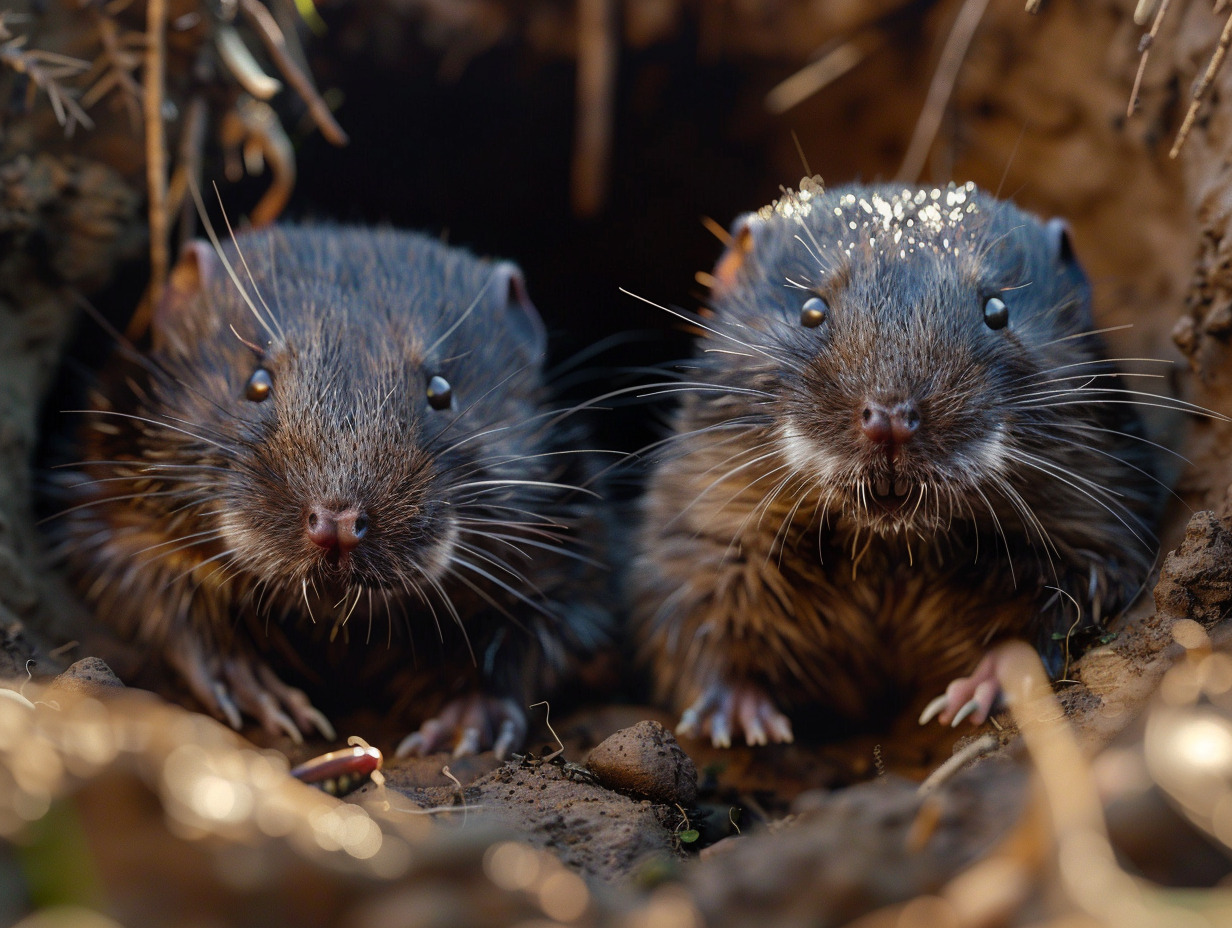
Their underground lifestyle imposes constant challenges, to which the mole responds with optimized anatomy and physiology. Their legs, equipped with powerful claws, provide them with effective tools for digging, while their short, velvety fur facilitates movement in narrow tunnels and prevents the snagging of soil particles. Their circulatory and respiratory systems have also adapted to the oxygen-poor atmosphere of the depths. The ‘baby mole’, from its earliest days, begins to develop these characteristics to integrate into the underground environment.
The very structure of their habitat, these famous tunnels, is the result of highly specialized behavior. The mole’s nest, established in the deepest tunnels, offers additional protection against predators and the elements. These tunnel networks, true labyrinths beneath the surface, are not only shelters but also traps for their prey, thus facilitating hunting. The life of the mole, solitary and meticulously organized around its territory, reveals a profound adaptation to a world where the slightest mistake can be fatal.
The Life Cycle and Survival Strategies of Moles
The reproduction of the European mole, this common species on our continent, follows a well-defined annual cycle. At the end of winter, a reproductive process begins, culminating in giving birth in spring. Moles, measuring about 17 cm and weighing between 60 and 110 g, have soft gray fur that provides their young with a comfortable and secure environment. The molehill, this characteristic mound of earth on the surface, signals the existence of tunnels and the presence of these burrowing mammals. It is formed by the surplus soil that moles bring to the surface when creating their underground networks.
Unlike many mammals, the mole does not practice hibernation. It remains active all year round, burrowing deeper into the ground to escape the winter cold. This animal, whose diet primarily consists of earthworms, must consume a daily amount of food equivalent to its weight to meet its energy needs. This dietary requirement drives it to maintain constant activity, an incessant quest that sees it tirelessly traversing its underground labyrinths.
The mole’s survival is constantly threatened by a multitude of predators. Dogs, cats, foxes, wolves, badgers, and humans represent various dangers for these solitary creatures. The mole has thus developed complex survival strategies, from the defensive structure of its tunnels to its stealthy movement habits. It is a remarkable example of adaptation and resilience in an underground world where life is organized away from prying eyes, in the silence and darkness of the depths.