
A poor distribution of cement in the lean screed systematically leads to premature cracks and loss of adhesion. The instinctive addition of water, often considered trivial, compromises the entire structure, even when the dosage seems correct on paper. The omission of a simple check of the aggregate grain size exposes one to uniformity defects and unexpected settling. These common mistakes on construction sites directly impact the longevity and safety of the work.
Why the dosage of the lean screed remains an often underestimated step
In the construction sector, the composition of the lean screed is sometimes seen as a formality. However, every proportion, every gesture matters. The lean screed dosage is not a step to be rushed: it engages the solidity of the work, its endurance against time, and its ability to withstand daily use. Too often, some settle for rounding the quantities or adding a bit of water by eye, convinced that it won’t make a difference. But this kind of approximation always leaves traces: lack of flatness, insufficient strength, or reduced durability.
The whole issue lies in respecting the proportions between cement, sand, and water. The slightest variation alters the thermal conductivity, conditions the screed’s ability to serve as a substrate for tiling, or to insulate a concrete slab. Too much binder, and the structure becomes brittle; too little, and the mixture crumbles. Water also deserves full attention: too little, and the implementation becomes difficult; too much, and fragility sets in.
The mistakes to avoid in the dosage of the lean screed are numerous: forgetting to account for the moisture in the sand, not adjusting the water according to the weather, skipping the minimum thickness for laying. With each oversight, the risk of an unforgiving problem arises, often during the tiling or at the first frost.
Mastering this preparation requires rigor and vigilance: checking dosages, monitoring grain size, ensuring a homogeneous texture at every stage. Working with the lean screed is not about following a ready-made recipe; it’s about composing with precision to guarantee the cohesion of the whole, from the raw floor to the last tile laid.
The most common dosage errors: how to spot them before it’s too late?
Identifying a lean screed dosage error before starting the installation can prevent many troubles. The first clue often lies in the texture: a mixture that is too fluid betrays an excess of water in the lean screed. This detail, far from trivial, weakens the strength and complicates the drying of the lean screed. Conversely, if the mixture remains dry and crumbly under the fingers, it likely lacks water or cement, which opens the door to cracks in the lean screed and uncertain adhesion, especially on a concrete slab.
The temptation to overdose on cement, out of fear of a fragile result, may seem reassuring. But this excess makes the screed brittle, unable to absorb temperature variations. A bad lean screed dosage also reveals itself during installation: a material that does not smooth out, crumbles, or leaves water on the surface indicates a problem that will not resolve itself. Once the tiles are laid, warning signs appear quickly: hollow-sounding tiles, localized lifting, defects in adhesion of the lean screed.
Here are the most common pitfalls to watch for during dosing:
- Excess water: settling of the substrate, unpredictable drying, weakened strength.
- Lack of cement: crumbly surface, rapid cracks, poor adhesion.
- Excess cement: excessive rigidity, accelerated cracking.
Observing the texture, controlling the proportions, and staying vigilant at every stage is the winning trio to avoid these pitfalls that can be costly once the screed is in place.
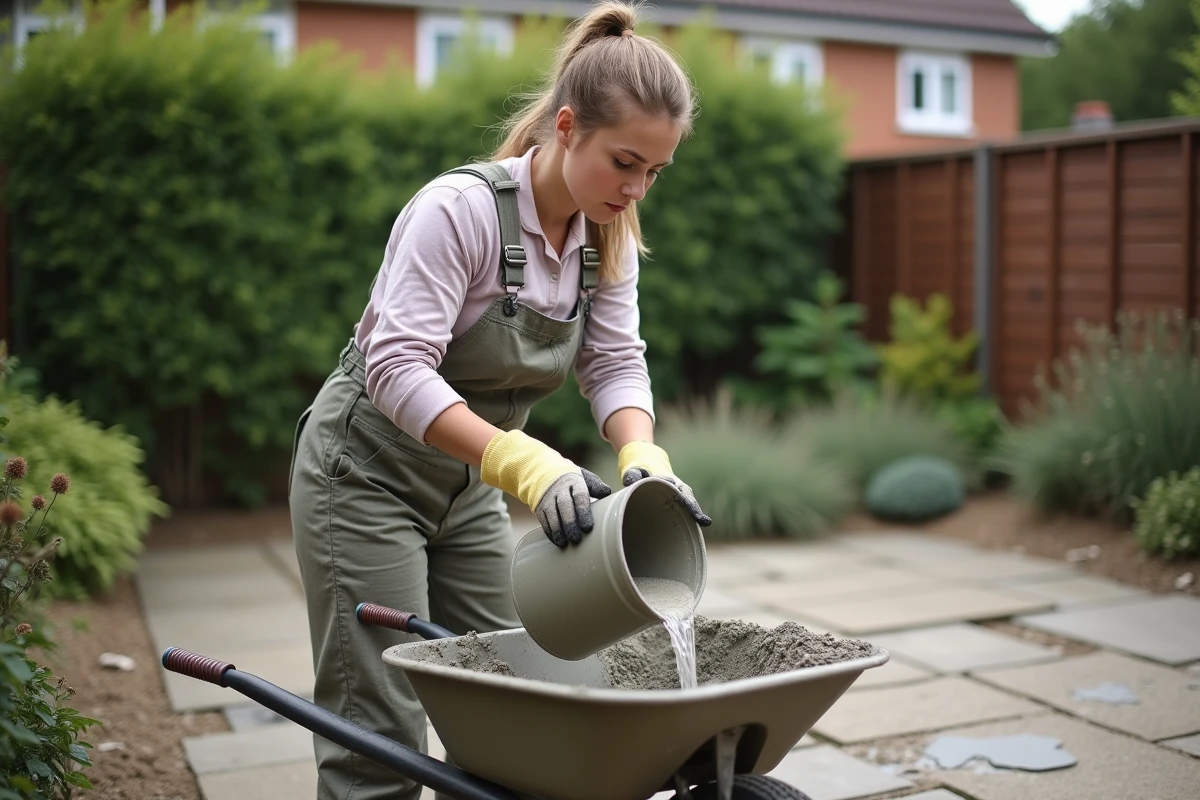
Concrete solutions to avoid pitfalls and successfully achieve your lean screed on the first try
For the lean screed to fulfill all its promises, it all starts with the rigorous preparation of the materials. Opt for clean sand, with a consistent grain size, and adjust the cement according to the recommended proportion: generally count on 150 to 200 kg per cubic meter of sand, to combine strength and longevity.
The addition of water should be done gradually, controlling the texture at each stage. The ideal mixture holds together when pressed in the hand, without releasing water. Mixing is crucial: prefer a concrete mixer to achieve a uniform result, ensuring a homogeneous screed from the first to the last bag.
No room for improvisation: every deviation in dosage ends up costing, whether in the form of cracks or loss of adhesion under the tiles or the concrete slab. Before laying, check the planned thickness: aim for 4 to 6 cm depending on the intended use, to ensure both thermal conductivity and mechanical stability.
A quick check of the consistency by hand is enough to validate the mixture: the screed should hold together, neither flow nor crumble. For complex surfaces or those subjected to significant constraints, the intervention of a professional screeder remains wise. Relying on the ten-year guarantee of a certified craftsman is betting on peace of mind and durability, especially for large-scale projects.
All these precise, repeated, and controlled gestures make the difference between a screed that withstands the years without flinching and a floor that betrays, over time, the slightest negligence. At every stage, success lies in the details.