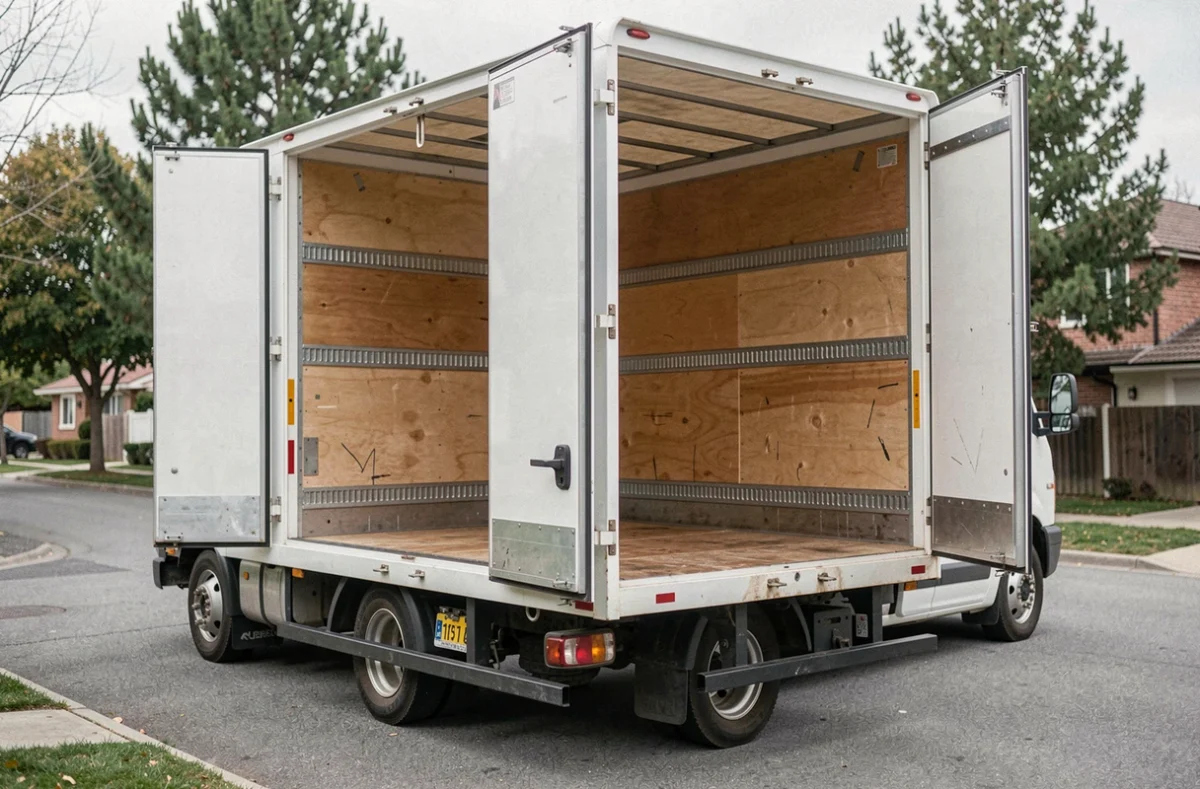
An 11 m3 truck refers to a utility van with a nominal loading space volume of eleven cubic meters. This size, often associated with the Renault Master or the Mercedes Sprinter, can be driven with a standard Class B license and is suitable for transporting furniture from a modest-sized apartment.
Understanding its actual dimensions and payload capacity requires looking beyond the simple volume figure. One must examine the interior dimensions, the useful load, and the size constraints that vary from model to model.
Payload of an 11 m3 truck: what the volume doesn’t tell you
The advertised volume of eleven cubic meters describes the available space in the cargo area. It does not provide information about the weight the vehicle can carry or the license required to drive it. These two parameters depend on the GVW (Gross Vehicle Weight), a figure listed on the vehicle’s registration document.
The payload is calculated by subtracting the empty weight from the GVW. On most 11 m3 vans, it typically ranges from around 1,200 to 1,400 kg depending on the versions. This figure includes the weight of the driver, passengers, and their personal belongings: therefore, it is necessary to deduct about 75 kg per person before calculating what the cargo area can actually accommodate.
A often overlooked point: two versions of the same model can have different payloads. The model year, engine type, or options can alter the empty weight. Checking the technical specifications of the reserved vehicle remains the only reliable way to know the actual available load. Relying solely on “11 m3” exposes one to overloading, with direct regulatory consequences: fines, vehicle immobilization, and potential liability for the driver in case of an accident.
To better understand the dimensions of the 11 m3 truck and their impact on transportable load, one must also examine the interior dimensions, which determine the objects that the cargo area can physically hold.

Interior dimensions of the 11 m3 van: length, width, and wheel arches
The exterior dimensions of an 11 m3 truck generally measure around 5.90 m in length, 2.40 m in width, and 2.60 m in height. These dimensions are important for parking and urban circulation, but they are not sufficient to determine if a piece of furniture will fit in the cargo area.
Dimensions that matter for loading
The floor length often reaches 3.20 to 3.50 m. The interior height is approximately 1.80 to 1.90 m, allowing most two-door wardrobes and standard refrigerators to be loaded standing up. The maximum width of the cargo area approaches 1.80 m.
However, the width between the wheel arches is the most misleading dimension. At the rear wheel wells, the usable width can sometimes be reduced by several tens of centimeters compared to the maximum width. A three-seater sofa that seems to fit based on the advertised dimensions may get stuck at this specific point.
- Floor length: the actual distance between the cabin partition and the rear door threshold, measured at the ground.
- Width between wheel arches: the minimum width at the narrowest point of the cargo area, often 20 to 30 cm less than the maximum width.
- Loading threshold height: the height between the ground and the floor of the cargo area, which determines the effort needed to lift heavy objects.
Before booking, asking for the exact interior dimensions of the proposed model avoids unpleasant surprises on loading day. The same “11 m3” label can cover significantly different configurations from one rental company to another.
Actual loading capacity: what an 11 m3 truck can transport
An 11 m3 van is typically suitable for moving a one to two-bedroom apartment (type F2 or small F3). In practice, this represents the contents of a standard furnished home: bed, sofa, table, chairs, common household appliances, and about thirty boxes.
Optimizing the available space
Filling an 11 m3 truck is more about Tetris than stacking. Flat objects (bed bases, table tops, mirrors) should be placed upright against the walls. Heavy boxes go on the floor, and lighter ones on top. The space between furniture legs accommodates small boxes or soft bags.
The side opening, present on some models, facilitates access to objects stuck in the middle of the cargo area without having to unload everything from the back. This equipment detail is worth checking at the time of booking if the trip includes multiple delivery points.
The actual usable volume is always less than the advertised 11 m3. The wheel arches, the shape of the cargo area, and the thickness of the walls take up part of the space. Counting on about 10 m3 of usable space provides a more realistic estimate for planning the loading.
Size and tolls: the height that changes the pricing class
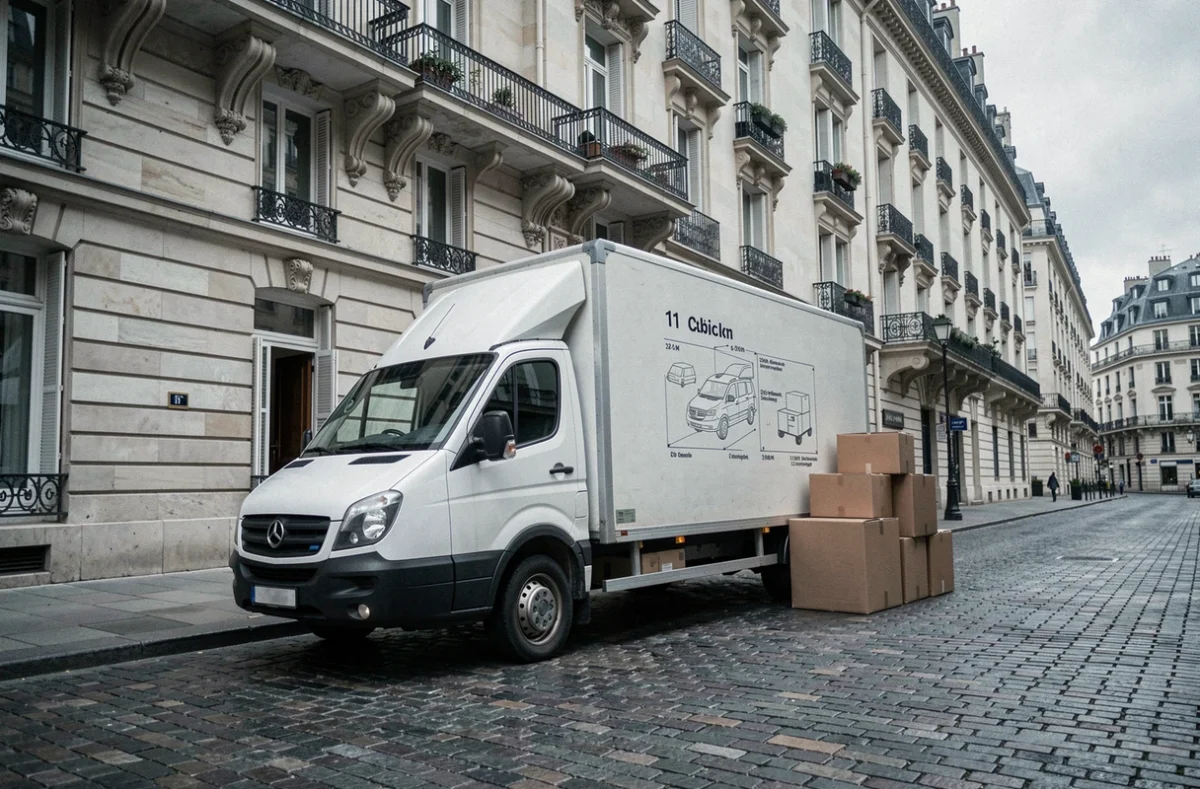
An 11 m3 truck often exceeds 2 m in total height, including the roof rack or deflector. This figure has a direct impact on the cost of highway tolls. Vehicles over 2 m and up to 3 m high, with a GVW of 3.5 tons or less, fall into class 2, which has a higher rate than that of a standard car.
The height varies depending on the model and version (standard roof, raised roof). Checking this dimension before a long-distance trip allows for anticipating toll costs and avoiding surprises at the barrier. Electronic toll systems automatically detect the vehicle’s height: underestimating the size is pointless.
The height also affects access to certain underground parking lots and delivery areas in city centers, where barriers often limit entry to 1.90 m or 2 m. Checking the planned route with the exact dimensions of the vehicle is part of the logistical preparation, just like the loading plan.
The 11 m3 truck remains an intermediate size that covers most moving needs for a small dwelling. Its true limit lies not in the displayed volume, but in the actual dimensions of the cargo area and the payload of the specific model that the rental company provides. Requesting the technical specifications before signing the rental contract is the most useful action to avoid any surprises on transport day.