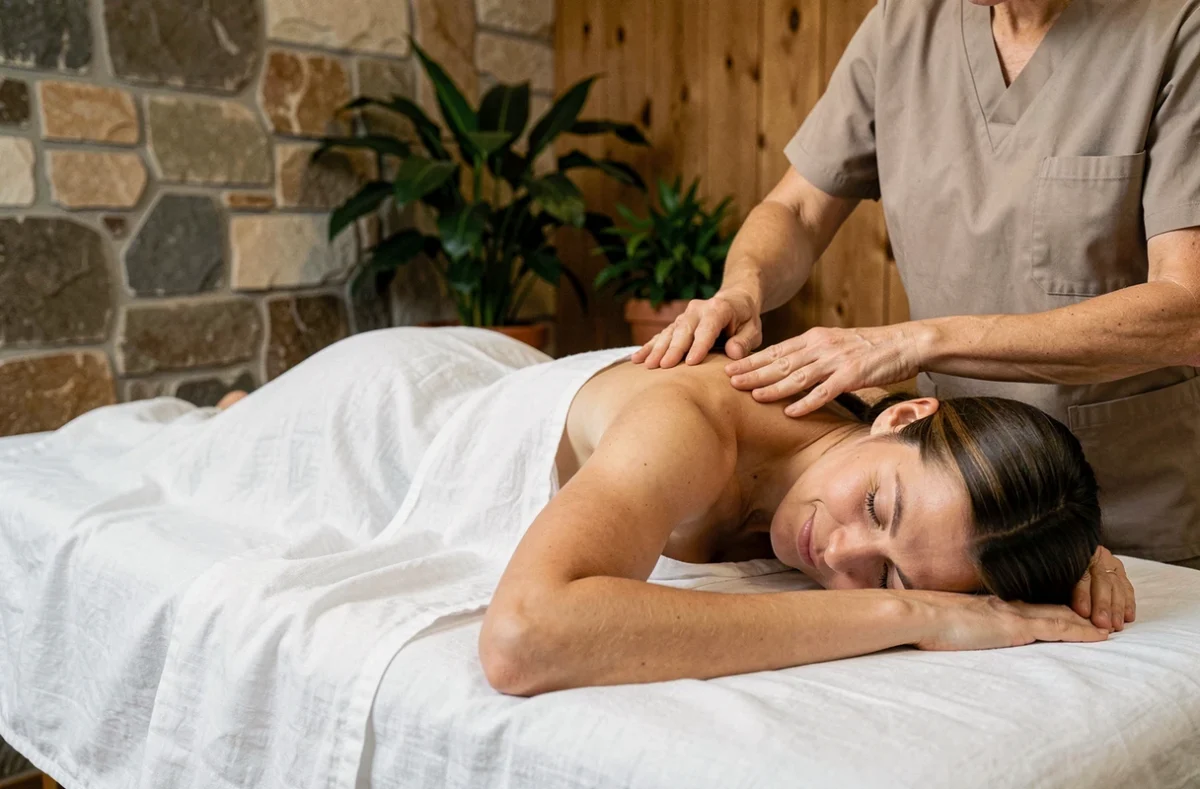
A client arrives with diffuse pain between the shoulder blades, another simply wants to disconnect after a busy week, and a third hesitates between a Swedish massage and a hot stone treatment. Three requests, three different responses. The personalized relaxing massage begins well before the first contact on the skin: it starts with questions asked prior to the session.
Pre-session assessment: personalization begins with a safety exchange
Personalization is often reduced to the choice of an oil or musical ambiance. In practice, the first useful step is a structured exchange about health status, specific expectations, and areas to avoid.
Professional recommendations suggest checking these three points before each session. This is not a formality: serious adverse effects remain rare, but cases of thrombosis, nerve injury, or fracture have been reported, particularly with vigorous massages or in fragile individuals.
Specifically, questions are asked about existing pain, chronic pathologies (circulatory disorders, joint problems), ongoing treatments, and any recent surgical interventions. A serious pre-session assessment protects both the practitioner and the recipient. This filter also helps guide the choice of techniques and movements suitable for each profile.
This approach centered on well-being can be found at Les Massages De Tiphaine, where the session is adjusted to the needs identified during this initial exchange.
Wellness massage and therapeutic massage: a legal boundary to know
The confusion between relaxing massage and medical care persists, even among practitioners themselves. In France, the distinction is legally clear.
The ruling of the Court of Cassation on June 29, 2021, confirmed that the monopoly of physiotherapists exclusively concerns therapeutic massage (diagnosis, rehabilitation, treatment). Wellness massage can be practiced by other professionals, provided that no promises of healing or prescriptions are made.
Law No. 2024-420 of May 10, 2024, reinforced this framework by creating an offense aimed at inciting abandonment or abstention from care. A practitioner of relaxing massage cannot present their practice as an alternative to medical treatment. This point changes the way we communicate about the benefits of massage: we talk about relaxation, relieving muscle tension, promoting blood circulation, but not about healing.
Check the practitioner’s training
Since wellness massage is not a regulated profession in France, there is no mandatory state diploma. Available training ranges from a few days to several hundred hours. Some are registered with the RNCP (National Directory of Professional Certifications), while others are not.
Before booking, one can ask the masseur about their training, its duration, and whether it includes modules on anatomy and contraindications. Feedback varies on this point, but solid training covers at least basic anatomy, pressure techniques, and safety precautions.
Relaxing massage techniques: choose based on tension, not trends
Lists of techniques presented as interchangeable circulate. In practice, each method targets different situations. Here are the main families and their concrete uses:
- Effleurage and long strokes (California type): suitable for very stressed individuals, first sessions, or those who cannot tolerate pressure well. The work focuses on overall body relaxation and stress reduction through continuous contact.
- Petrissage and deep pressure (Swedish type): target localized muscle tension, particularly in the cervical area, trapezius, and lower back. Require an experienced practitioner to gauge pressure without causing pain.
- Point pressure (inspired by shiatsu): work on specific areas along the meridians. Suitable for individuals who prefer to remain clothed or who do not appreciate the use of oil.
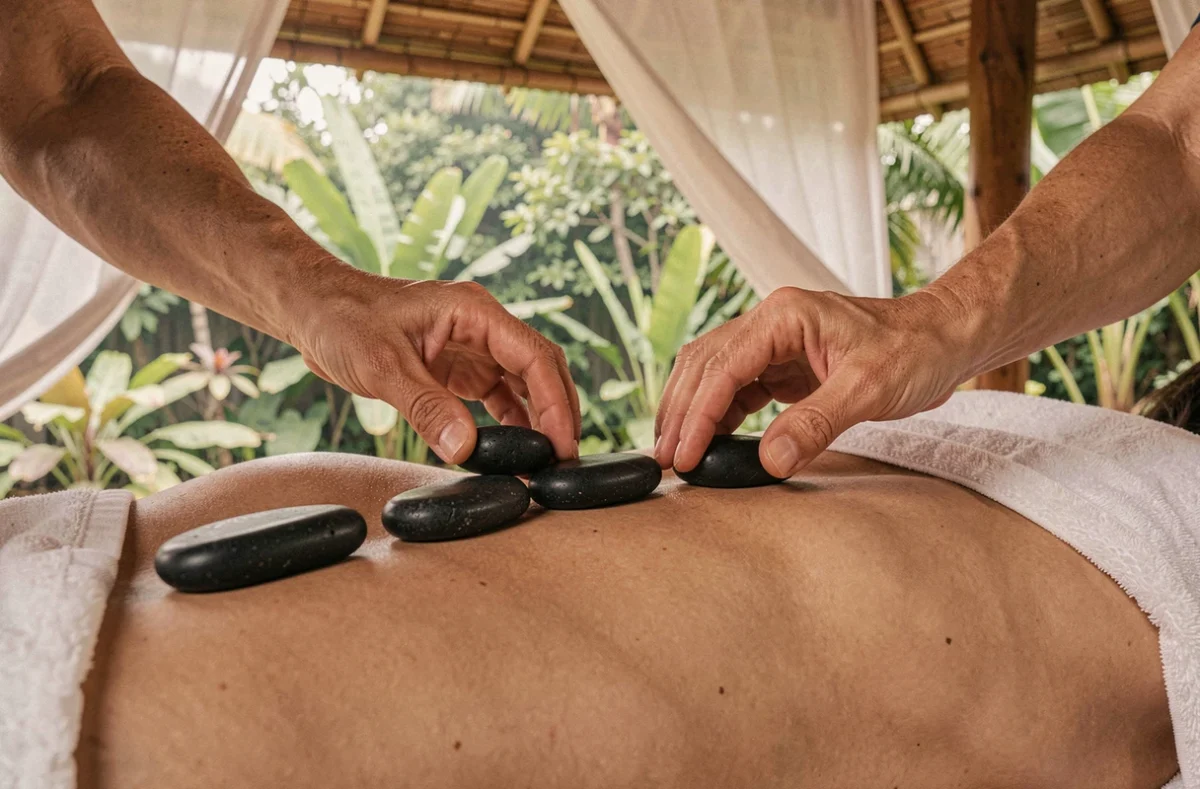
- Hot stone massage: the heat promotes muscle relaxation even before manual work begins. Particularly suitable for deep tensions and individuals sensitive to cold in the treatment room.
The choice of technique should not depend on a trend but on an exchange with the practitioner about the current bodily state. The same person may need light effleurage one month and firm petrissage the next.
Pressure, duration, and frequency: parameters that change the outcome
The technique alone does not determine everything. Three variables determine the effectiveness of a relaxing massage session.
Pressure intensity
If too light, the pressure does not reach the tense muscle layers. If too strong, it causes reactive contractions. The practitioner adjusts the pressure in real-time according to the body’s reactions. A good reflex: immediately signal any pain during the session. The relaxing massage should never be painful.
Session duration
Short sessions are suitable for targeted work (neck, shoulders). Longer sessions allow for overall work that promotes deep relaxation. It is generally observed that below twenty minutes, the nervous system does not have time to shift to a significant state of relaxation.
Regularity
A one-time massage provides temporary relief. For a lasting effect on stress and chronic tension, regularity matters more than the duration of each session. Spacing appointments regularly yields better results than a single, even long, session.
What a relaxing massage does not replace
Muscle relaxation, improved blood circulation, and stress reduction are documented benefits of wellness massage. However, it does not substitute for medical follow-up or physiotherapeutic care for a diagnosed pathology.
A good relaxation massage practitioner knows their limits. Referring to a health professional when the situation requires it is part of their competence. This clear boundary between well-being and therapeutic care protects the client and gives relaxing massage its rightful place: a concrete tool for stress management and physical recovery, accessible provided one chooses a trained and attentive practitioner.