A 40 m² plot in the city and a 200 m² garden in the suburbs require different equipment. Before browsing catalogs, it’s more efficient to start with the simplest constraint: how many people will be sitting outside at the same time, and for what purpose?
Dinner for six, morning coffee for two, afternoon reading under a tree—these all lead to very different choices in garden furniture, sun protection, and lighting.
Ground constraints and exposure: what determines everything else
You don’t place a solid wood table on soft grass the same way you would on a paved terrace. The ground dictates the stability of the furniture and, in the long run, its lifespan. On a lawn, the legs of a steel table sink after a few weeks of rain. A resin wicker top on an aluminum frame fares better on this type of terrain because its weight remains low.
Exposure also plays a direct role. A south-facing space without trees calls for a bioclimatic pergola or a shade sail before even considering a chair. Conversely, a northeast-facing garden can do without a parasol for most of the day and focus the budget on a good relaxation area.
You can find these logics in the equipment offered by Ambiance Jardin, where the selection takes into account real configurations rather than an ideal decor.
A often overlooked point: wind resistance. Large cantilevered umbrellas require substantial weighting. If the garden is located in a wind corridor (back of a housing estate, hillside), it’s better to opt for a pergola anchored to the ground or backed against a wall.
Outdoor furniture: choose the material according to actual use
Competitors often list wood, metal, and resin. We go further: the material is chosen based on the frequency of use and storage capacity.
- Recycled aluminum, increasingly present in low-carbon impact ranges, withstands the elements without rusting and is easily moved to reorganize the space according to the number of guests.
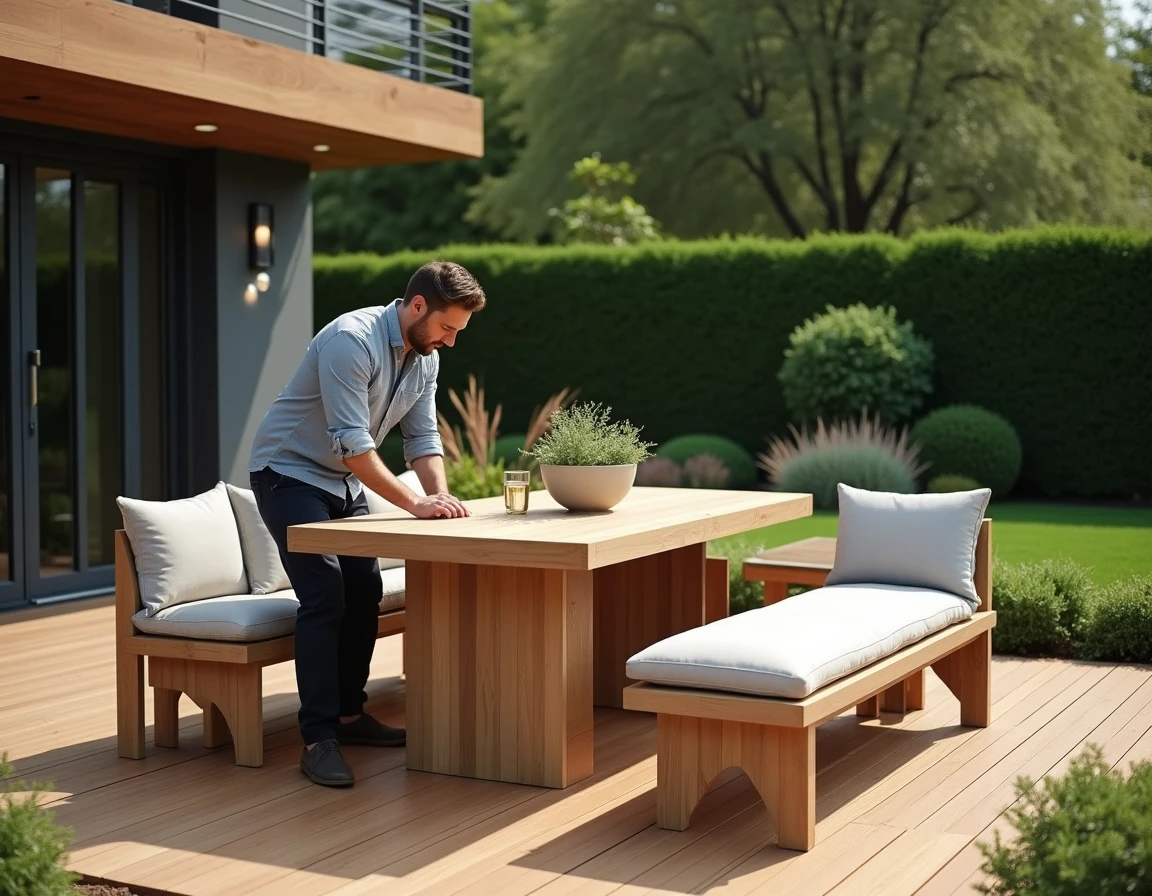
- Certified wood (acacia, eucalyptus) ages well as long as it is oiled once or twice a year. It is suitable for semi-permanent installations that are not brought indoors in winter.
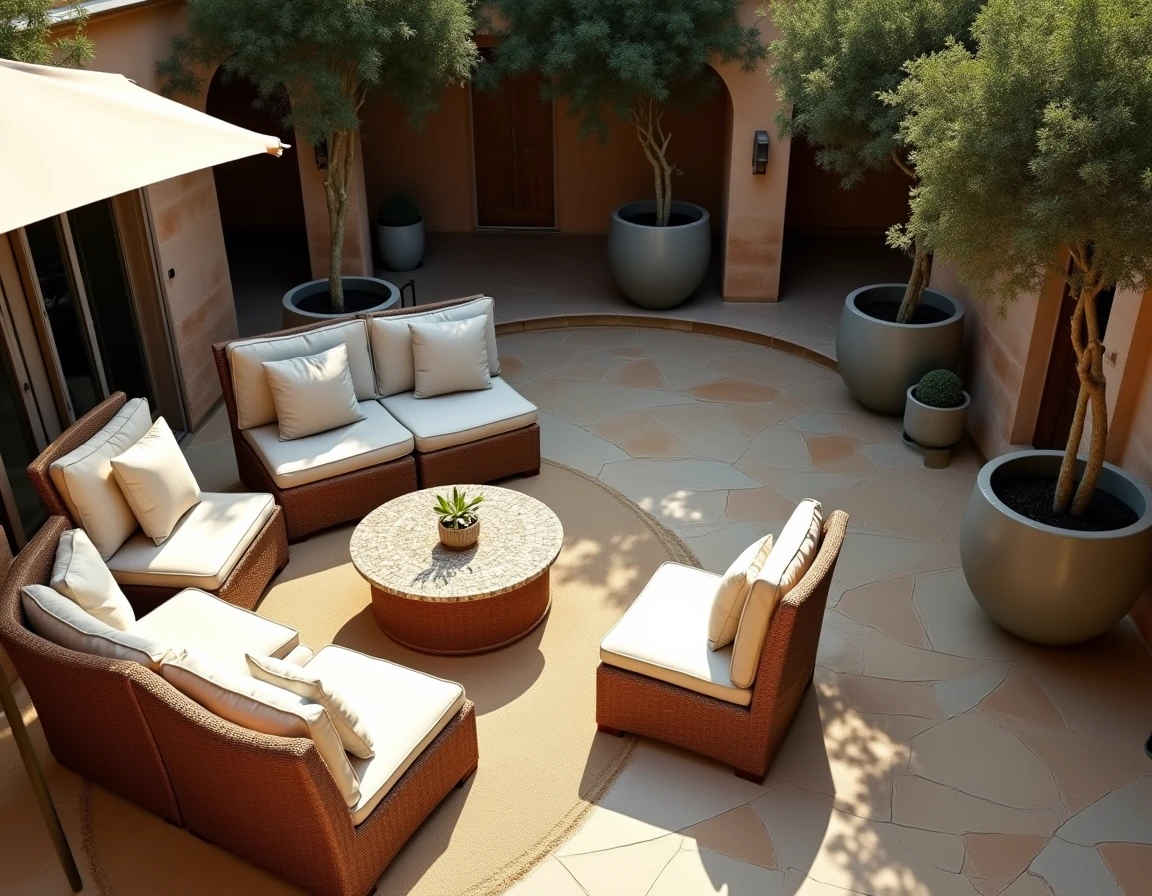
- Resin wicker on a steel frame offers a good compromise for small spaces: chairs stack, tables fold, and cleaning is done with a water jet.
For a dining area that regularly accommodates six to eight people, an extendable aluminum table remains the most versatile choice. You can reduce it for everyday use and expand it on weekends. No need for two tables.
The chair question
The low lounge chair encourages long stays. The higher dining chair is better suited for meals. Mixing the two in the same space creates distinct zones without physically partitioning the garden. A low lounge under the pergola, a high table closer to the house (and the kitchen): this arrangement works in most configurations.
Solar lighting and outdoor cooking: two elements that change the ambiance
Lighting transforms a functional garden into a friendly space as soon as night falls. Solar LED bollards can be planted along a path in just a few minutes. Their autonomy is usually sufficient for a summer evening, but feedback on this point varies depending on the day’s sunlight and the quality of the photovoltaic cells.
A solar LED string light stretched between two anchor points (pergola post, tree branch, wall hook) produces diffuse lighting that avoids the “construction site spotlight” effect. We aim for a warm light, below 3,000 kelvins, for a candle-like effect.
Barbecue, plancha, or fire pit: decide based on available space
A pellet barbecue heats up faster than a traditional charcoal one and produces less smoke. This type of appliance is suitable for gardens close to neighbors where odor management is important. The plancha, placed on a cart, is easy to store and cooks for eight people on a compact surface.
The fire pit serves a dual purpose: heat source in mid-season and focal point for evenings. However, it does not replace a proper cooking appliance for complete meals. It is considered an ambiance complement, not a primary piece of equipment.
Sustainable landscaping: integrating plants as an integral part of the equipment
Plants are often thought of as decorative elements. On the ground, they play a role in climate equipment. A non-invasive bamboo hedge (like Fargesia) cuts lateral wind better than a composite screen. A deciduous tree (maple, plane tree) provides shade in summer and allows light through in winter.
Combining a fixed structure with climbing plants (star jasmine, Virginia creeper) on a pergola reduces the feeling of heat under the roof without resorting to more expensive motorized adjustable slats. The aesthetic result depends on patience: it takes a few seasons to achieve dense coverage.
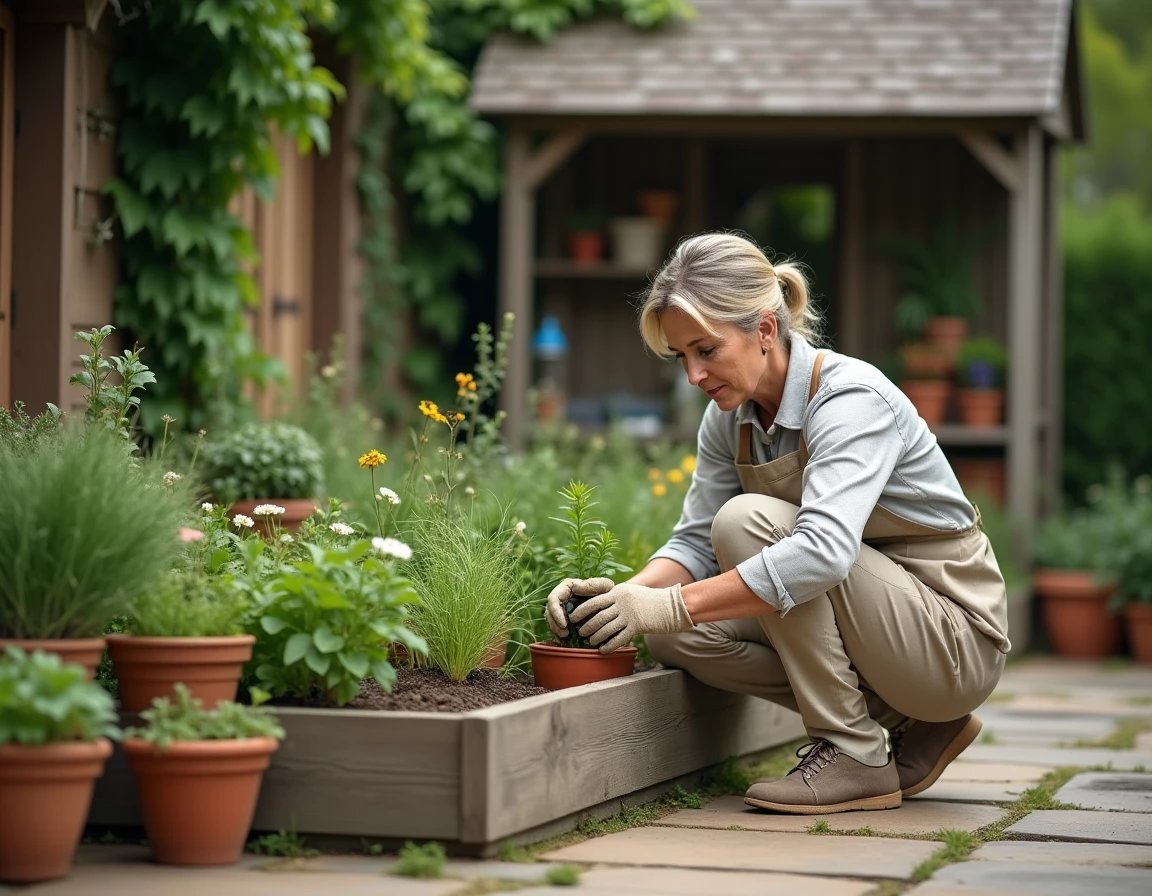
For planters and boxes on the terrace, suitable potting soil and a programmed drip irrigation system avoid the daily chore. This system, connected to a simple outdoor tap, uses less water than approximate manual watering.
Designing an outdoor space depends less on the number of pieces of furniture than on their suitability for the ground, exposure, and actual habits. A well-positioned lounge under natural shade, discreet solar lighting, and a cooking appliance suitable for the neighborhood cover the vast majority of uses. The rest is just added comfort, not a necessity.