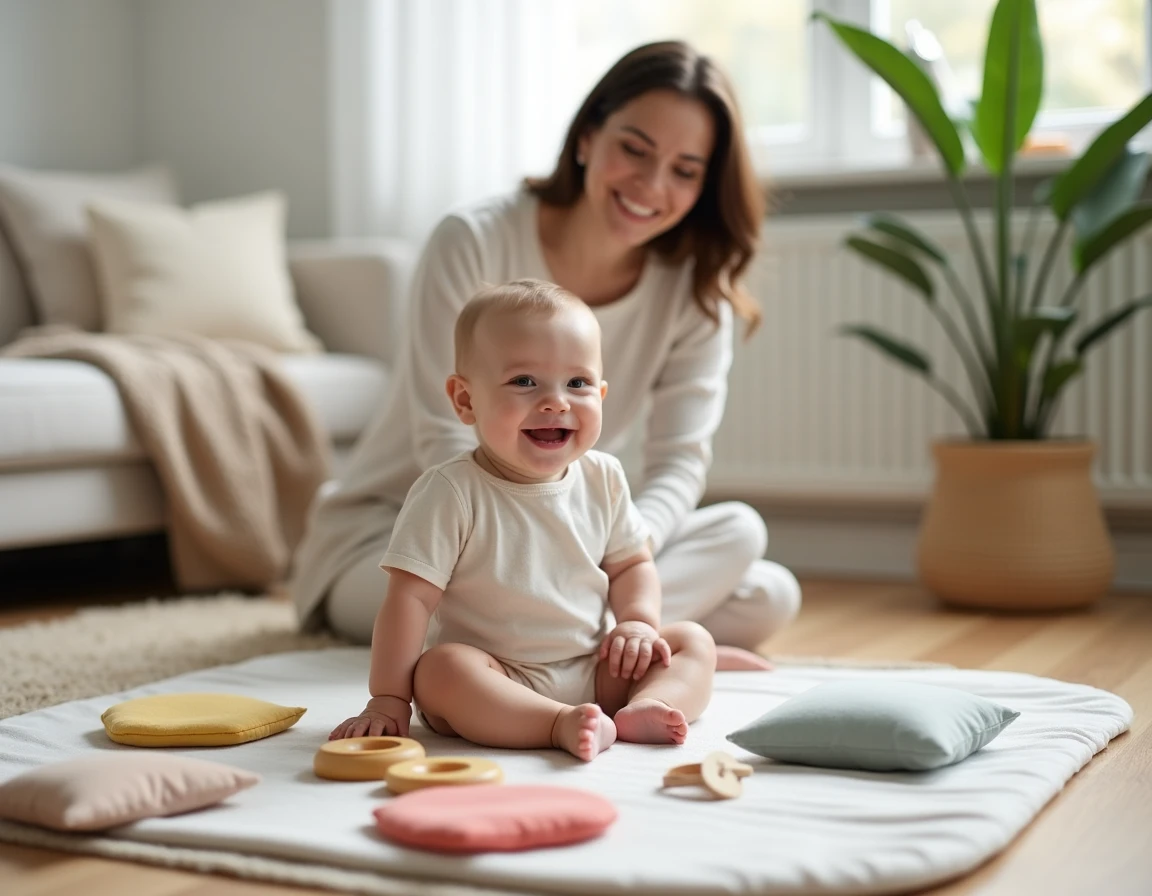
At 8 months, a baby begins to move around, grabs objects with an increasingly precise pincer grip, and reacts to familiar sounds. These abilities open the door to various awakening activities, provided that their pace is respected and free exploration is prioritized over overstimulation. Here are ten concrete suggestions, tested in different contexts (indoor, outdoor, bath), to support their motor, sensory, and language development.
1. Treasure basket with everyday objects
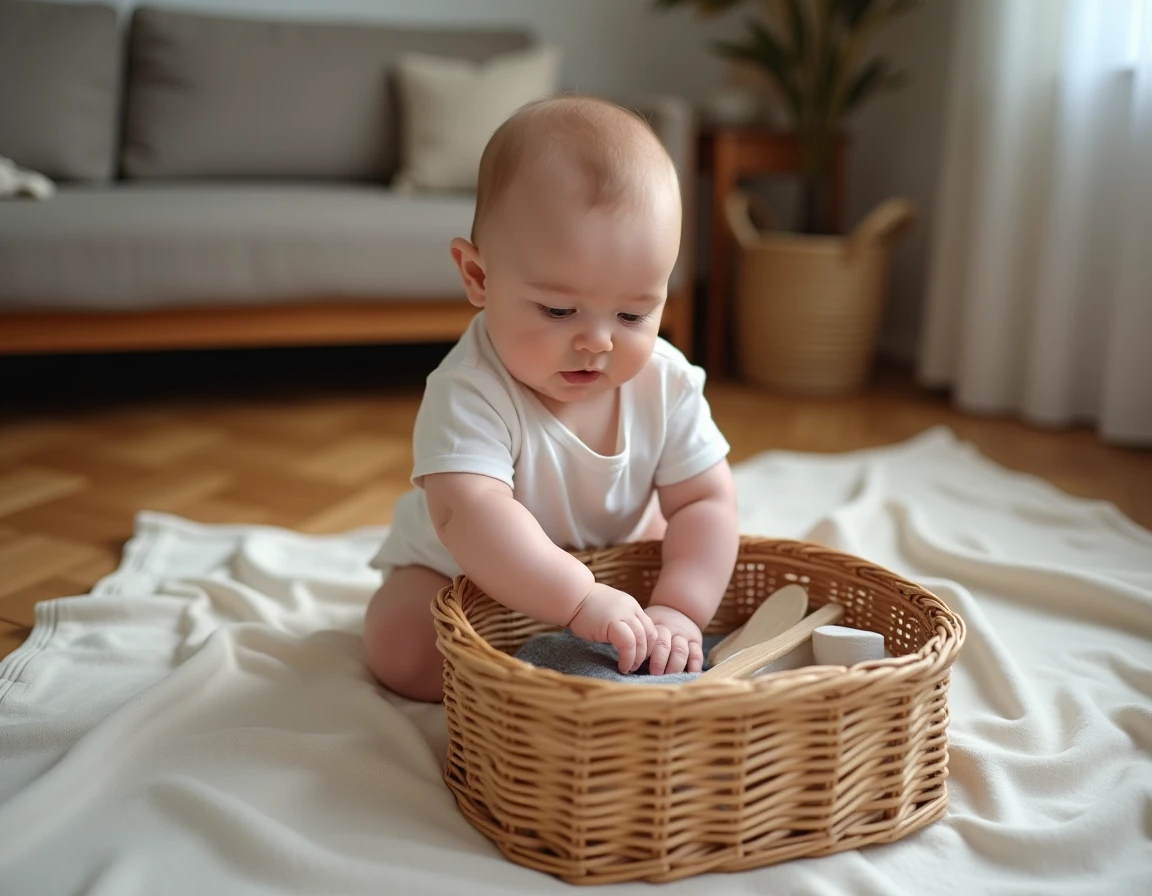
Gather in a small wicker basket a wooden spoon, a piece of fabric, a metal lid, and a soft ball. The baby picks, touches, brings to their mouth, compares textures and weights. This free exploration stimulates hand-eye coordination and fine motor skills.
Varying the objects each week maintains curiosity. One point to watch: each item must be large enough not to be swallowed and free of small detachable parts.
Several early childhood professionals remind us that offering awakening activities for 8-month-old babies with simple everyday materials works just as well as specialized toys, sometimes better, because the sensory diversity is greater.
2. Imitation game of sounds and facial expressions

Position yourself facing the baby, capture their gaze, then reproduce their babbling (“ba-ba”, “da-da”) before introducing new sounds. Exaggerate facial expressions, open your mouth wide, stick out your tongue. The baby attempts to imitate, and this back-and-forth constitutes a first learning of verbal communication.
Speech therapists emphasize the importance of these imitation games starting at 7 or 8 months to develop joint attention, which is the ability to share the same focus with an adult. Classic activity lists focus on sensory and motor skills, but this linguistic dimension deserves equal attention.
3. Sensory walk outdoors

Recent recommendations emphasize outdoor awakening as a factor for overall development at this age. A simple trip to the garden or park exposes the baby to the wind, the sounds of birds, the texture of grass, and variations in light.
Set the baby on a blanket on the ground and offer them the chance to touch leaves, a blade of grass, a smooth stone. Regular access to these varied environments enhances motor exploration and curiosity. Provide flexible clothing that does not hinder movement.
4. Transferring with large raw pasta
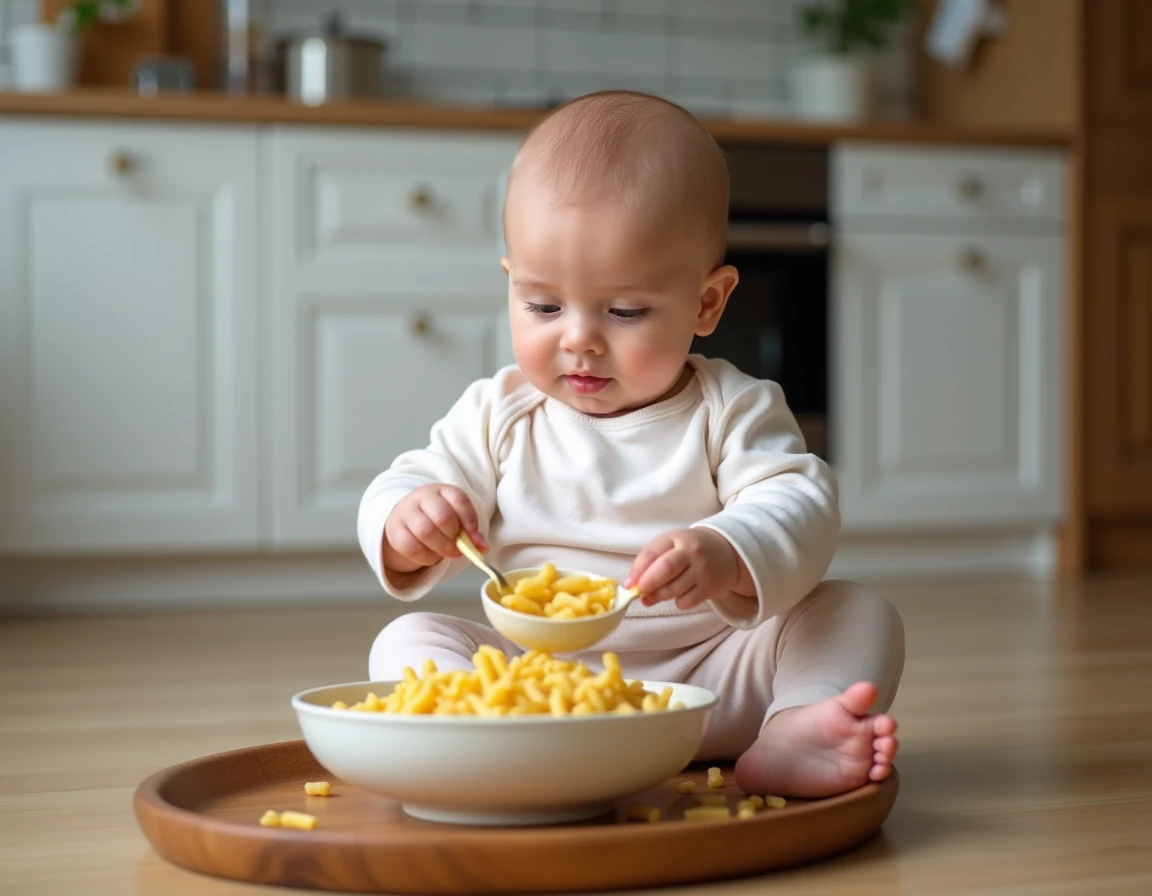
Two bowls, an appropriate spoon, and large raw pasta (like giant rigatoni). The baby attempts to transfer the pasta from one container to another, using their hands or the spoon. This is an exercise in hand-eye coordination that also prepares for the pincer grasp.
Ingestion is almost certain: choose pasta that is large enough not to be swallowed whole, and stay nearby throughout the playtime.
5. Repeated gesture nursery rhymes every day
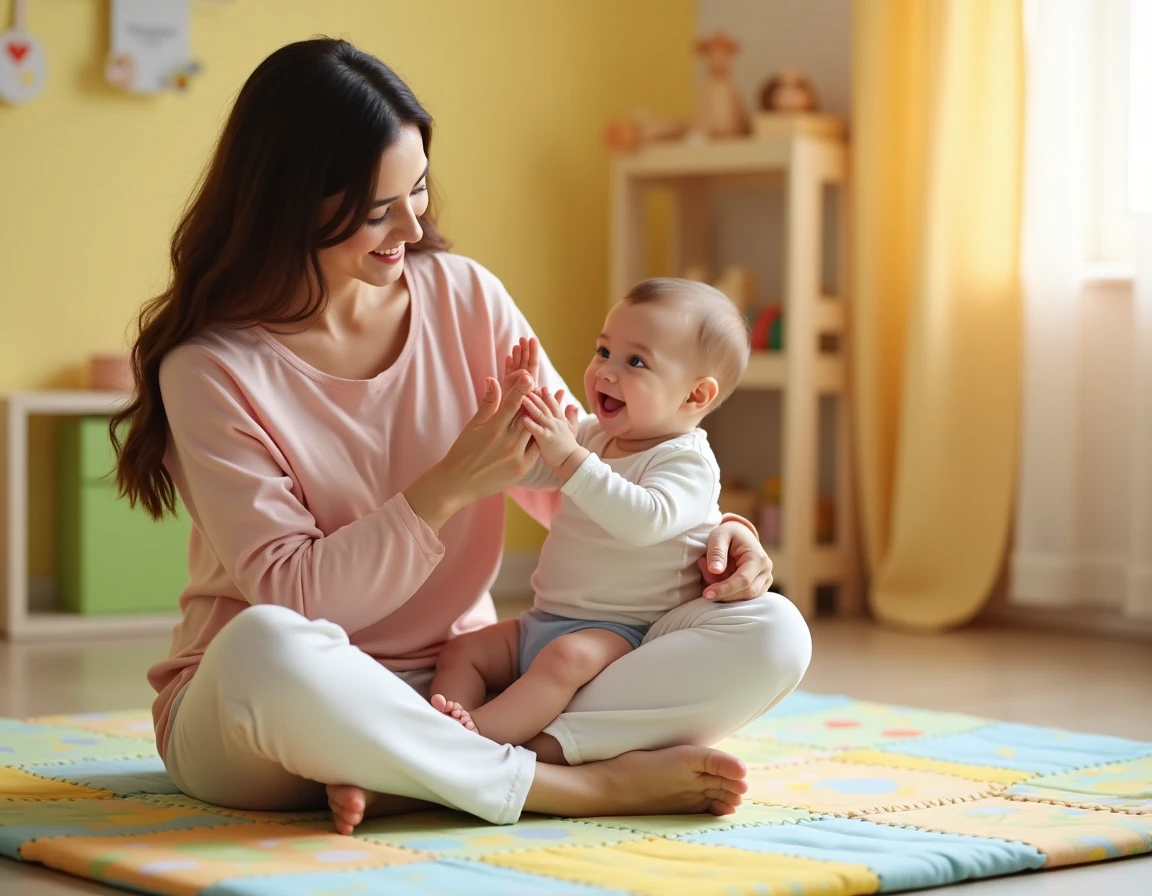
Feedback from childcare facilities shows that the daily repetition of the same nursery rhymes strengthens the baby’s emotional security and ability to anticipate. “Ainsi font font font,” “Les petites marionnettes,” or “Bateau sur l’eau” work particularly well because they associate a predictable gesture with each musical passage.
After a few days, the baby begins to anticipate the gesture, smiles before the expected moment, and even attempts to reproduce the movement. This is a concrete sign of memorization and sequential understanding.
6. Free exploration on the floor in soft clothing
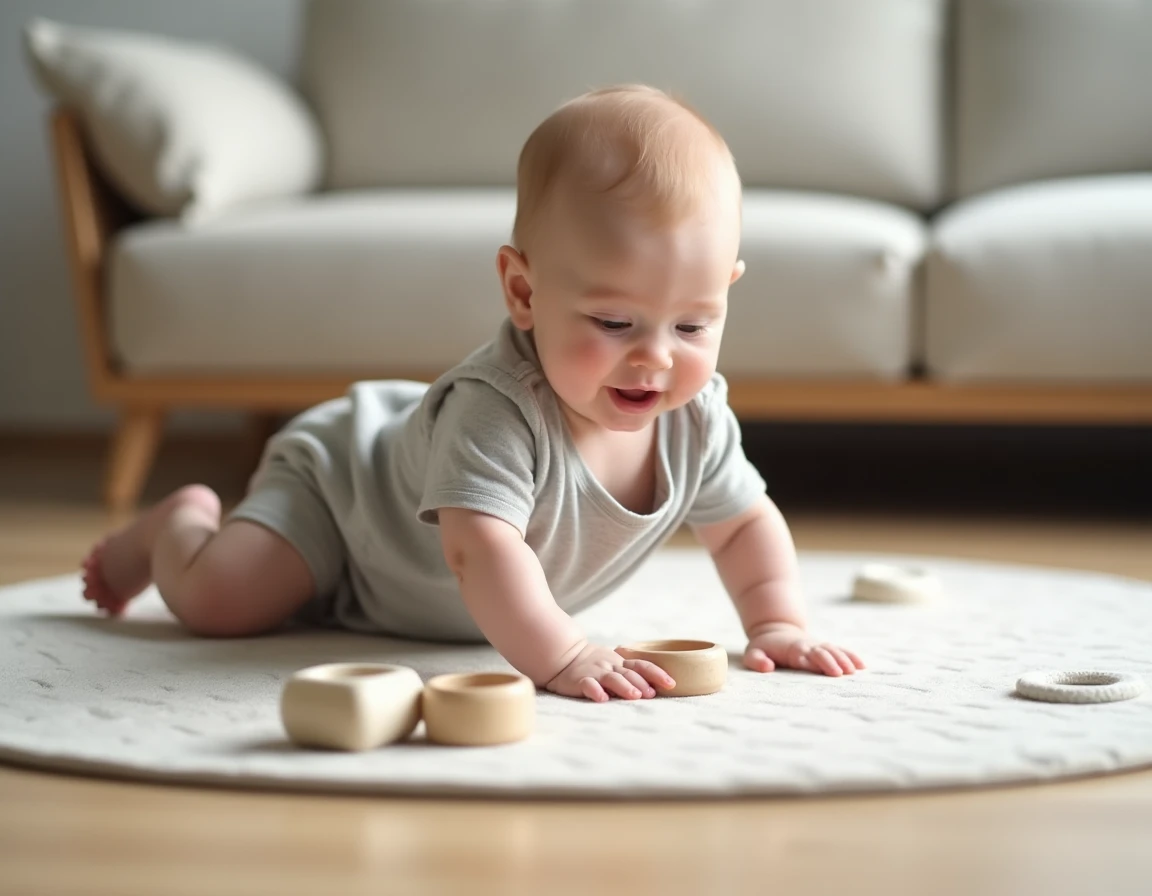
Before adding toys, it is important to check that the basic motor environment is suitable. Early childhood professionals recommend allowing the baby to move on the floor in a diaper or soft clothing, without a bouncer, walker, or restrictive seat.
This freedom of movement encourages crawling, rolling over, and the first attempts to get on all fours. A firm mat (not too soft) and a few attractive objects placed at a distance are enough to encourage movement.
7. Water play in a small basin
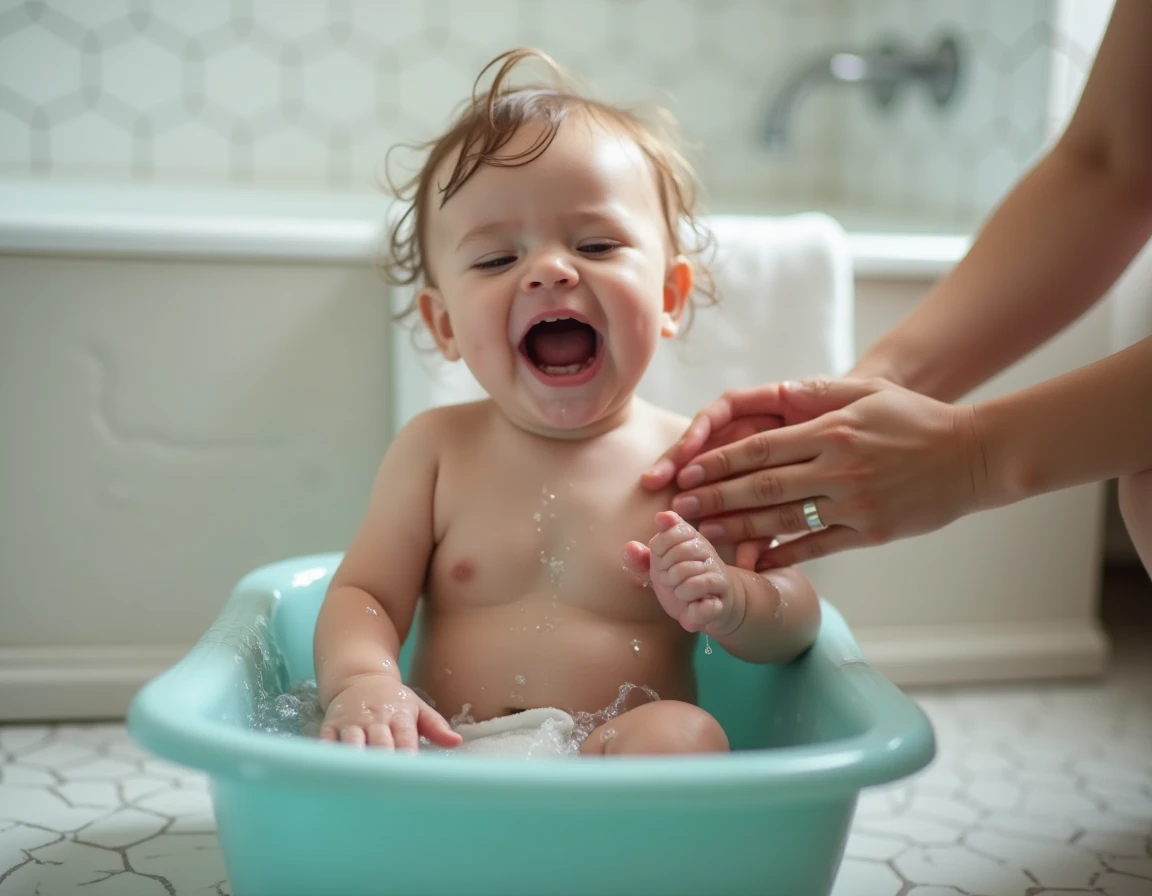
Fill a basin with a few centimeters of warm water, place cups, a sponge, and a small watering can inside. The baby splashes, transfers, and squeezes the sponge. Water play stimulates fine motor skills and offers a sensory experience that dry activities do not cover.
- Perforated cup: the flowing water captures attention and introduces a form of cause and effect
- Natural sponge: squeezing and releasing works hand strength
- Floating toy: pushing it, catching it, observing that it returns to the surface
8. Mystery bag with objects to take out and put back
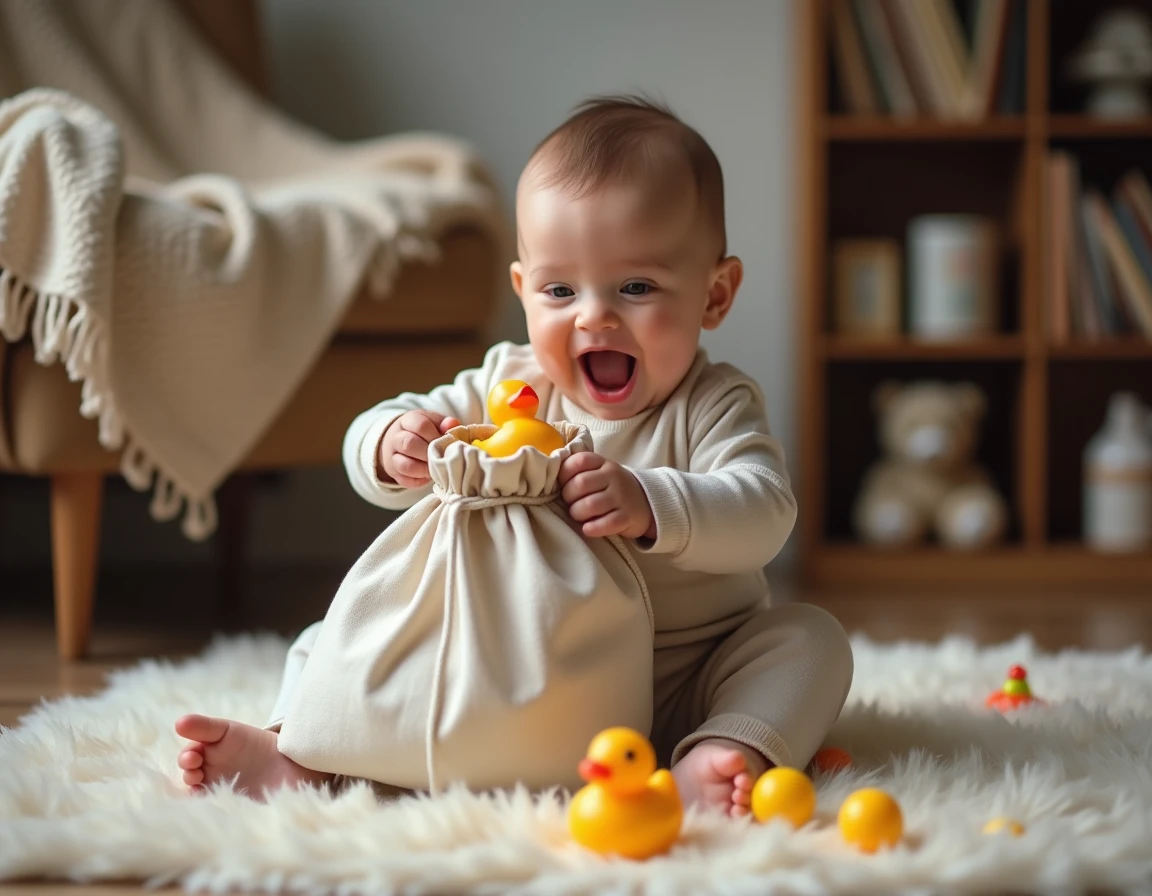
Place three objects of different textures (fabric ball, wooden ring, small board book) in an opaque fabric bag. The baby plunges their hand in, grabs an object, takes it out, examines it, and then puts it back (or not). This game works on object permanence, the ability to search for what is hidden.
The disappearance and reappearance of the object in the bag fascinates babies of this age. Regularly varying the contents prolongs interest without needing new materials.
9. Reading board books with flaps
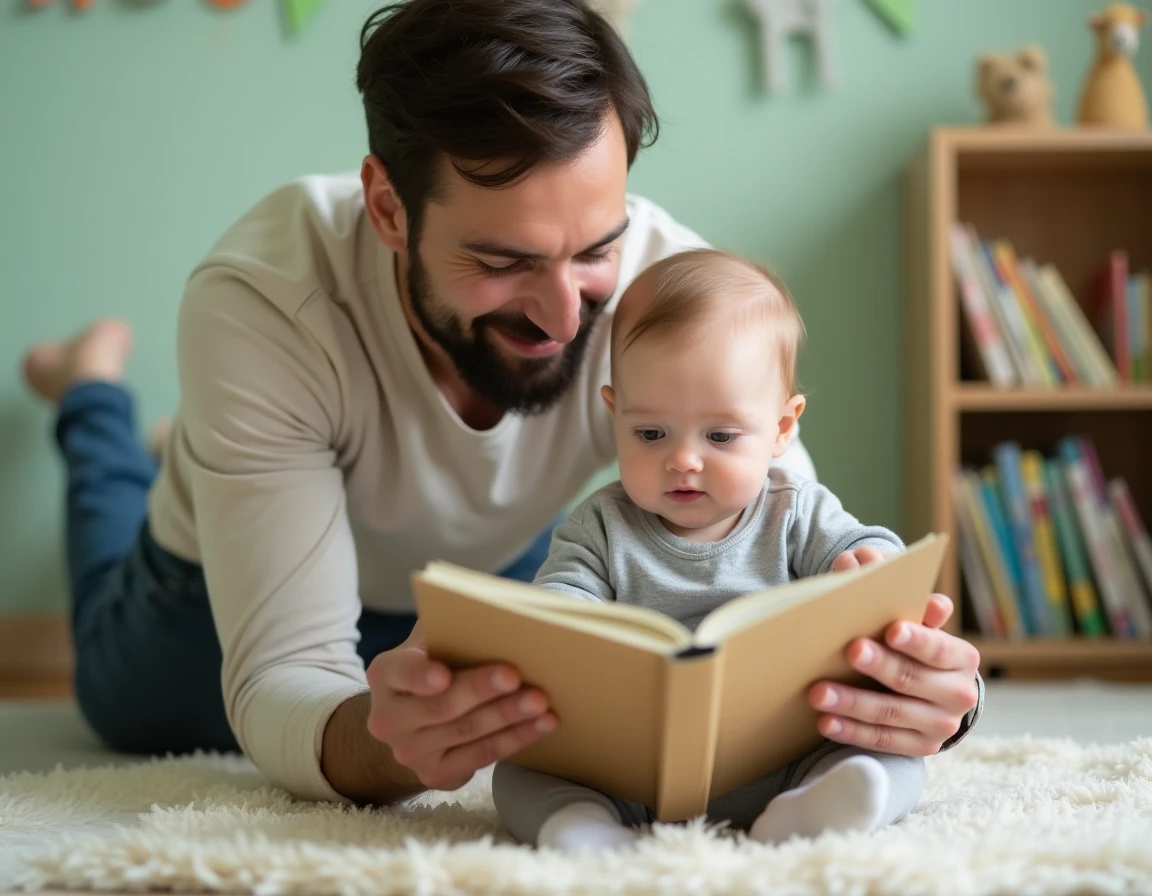
A board book with flaps to lift combines fine motor skills (grabbing the flap, pulling it) and cognitive awakening (discovering the hidden image). Naming what appears under the flap enriches the baby’s passive vocabulary.
Some criteria for choosing well:
- Thick pages that are resistant to mouthing
- Flaps large enough to be grasped by small hands
- Contrasting and simple images, one element per page
- Short or absent text, oral interaction comes from the parent
10. Motor course with cushions and blankets

Arrange cushions of various sizes, a rolled blanket, and a small fabric tunnel on the floor. The baby crawls over, navigates around, and uses support to stand up. This type of course stimulates gross motor skills and balance in a safe environment.
Adjust the difficulty to the baby’s level: a flat cushion to start, then slightly higher obstacles over the weeks. Staying nearby to support without intervening systematically allows the baby to develop their own movement strategies.
Each of these activities works with simple materials and primarily requires attentive presence. The common thread remains the same: observe what the baby is trying to do, provide an environment that supports this intention, and accept that the daily repetition of the same game is as beneficial as novelty.