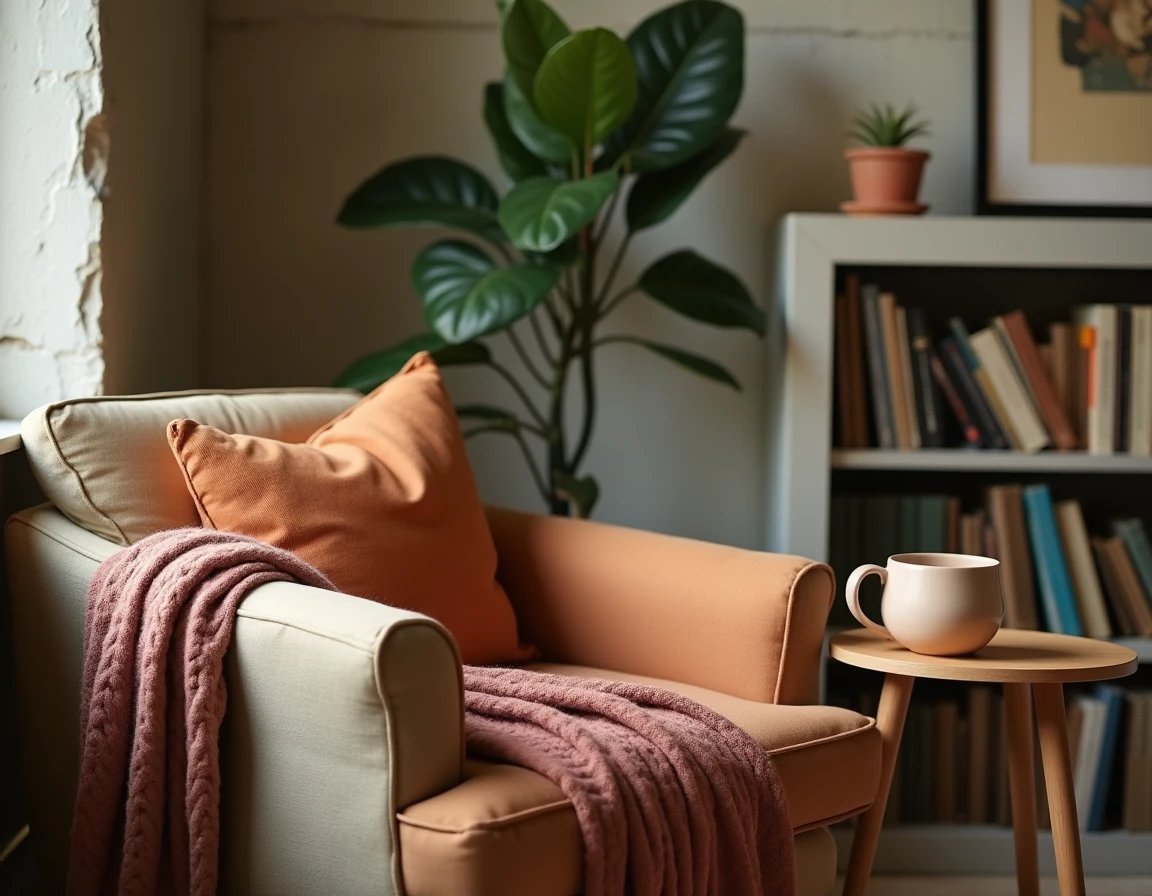
Creating a warm interior is not just about piling throws on a sofa. The feeling of comfort in a room depends on measurable parameters: the color temperature of the lighting, the hygroscopic capacity of the surface materials, and the proportion of natural materials compared to smooth, cold surfaces. Comparing these levers allows for targeting interventions that truly transform the atmosphere of a living room or bedroom, rather than dispersing a budget on decorative accessories with no real impact.
Bio-based materials and synthetic materials: impact on perceived comfort
Competitors often talk about wood, rattan, or linen, but rarely about the technical reasons that make these materials more pleasant to live with. The difference lies in two physical properties: hygroscopic regulation (the ability to absorb and release ambient moisture) and surface thermal inertia (the sensation to the touch).
| Material | Hygroscopic Regulation | Thermal Sensation to the Touch | Acoustic Comfort |
|---|---|---|---|
| Lime plaster | High | Neutral to warm | Moderate absorption |
| Cork (wall or floor covering) | High | Warm | High absorption |
| Linen / hemp (textile) | High | Warm, soft | Moderate absorption |
| Standard acrylic paint | Low | Neutral to cold | None |
| Porcelain stoneware tiles | None | Cold | Reflective |
Lime plaster on the walls of a living room acts as a moisture buffer. The room remains comfortable without resorting to a humidifier in winter. Cork absorbs both moisture and sound, which explains its rising popularity in recent renovations, especially in old apartments where walls easily transmit sound.
In contrast, a room entirely tiled with walls painted in synthetic paint will require more textiles and furniture to compensate for the perceived coldness. Trends promoted by ADEME and PUCA around bio-based materials confirm that the choice of wall and floor surfaces weighs more heavily on the ambiance than a decorative accessory placed on top.
To deepen your layout choices, the Niddou website to explore gathers concrete ideas categorized by room and style.
Connected lighting and color temperature: the underestimated lever
Most decor guides recommend “multiplying light points” or adding candles. These tips remain vague. The determining parameter for a cozy atmosphere is the color temperature expressed in kelvins.
A 2,700 K bulb produces an orange light, close to that of a candle. At 4,000 K, the light shifts to neutral white, suitable for a work surface. Beyond 5,000 K, the tone becomes bluish, stimulating but not conducive to relaxation.
Lighting scenarios by living space
- Living room: an adjustable ceiling light between 2,200 K and 2,700 K for evenings, combined with a reading lamp at 3,000 K for reading. The temperature variation effectively replaces the multiplication of lamps.
- Bedroom: an LED strip behind the headboard, set to a maximum of 2,200 K, promotes falling asleep by limiting exposure to blue light.
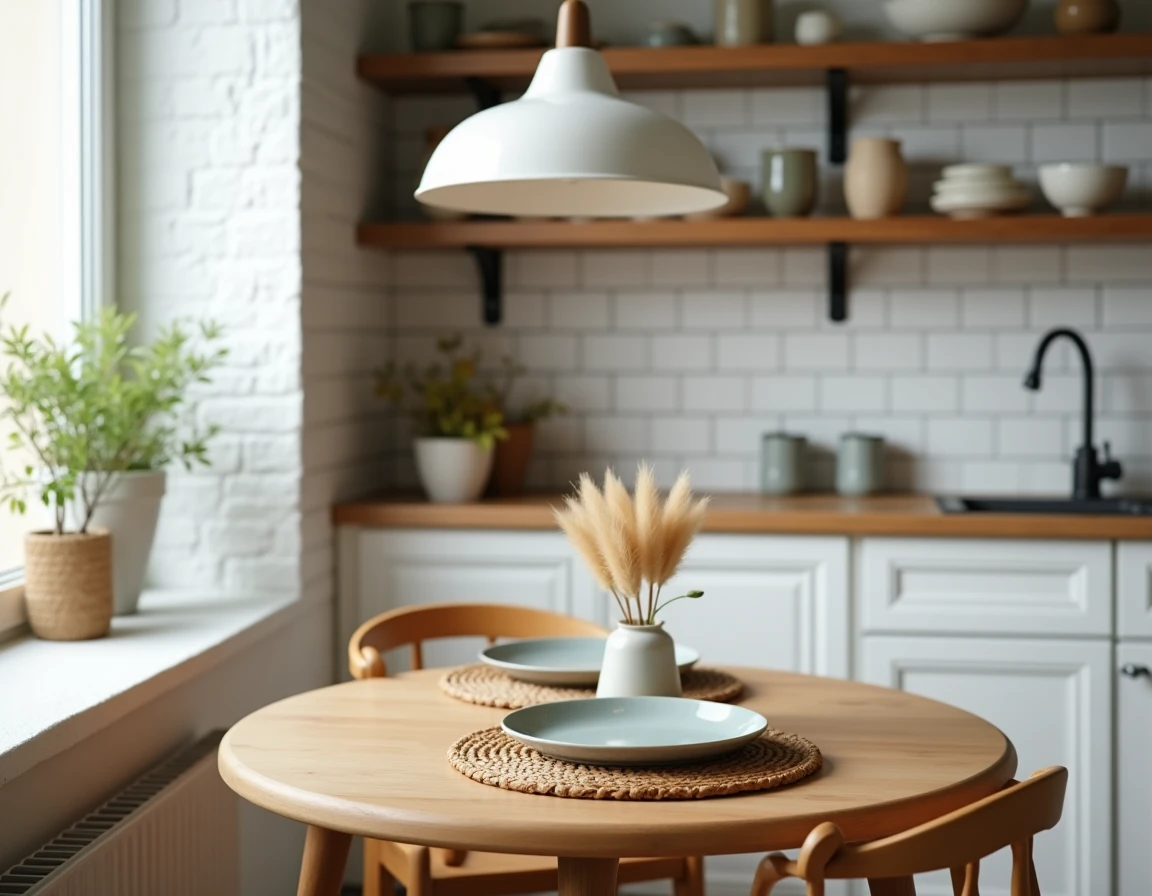
- Dining room: an adjustable pendant light between 2,700 K and 3,200 K allows for transitioning from an intimate dinner to a family meal without changing bulbs.
Adjustable color temperature smart bulbs today cost only slightly more than standard LED bulbs. AFNOR and ADEME document this shift towards app-controlled lighting, which allows for programming automatic scenarios: cold light in the morning, gradually transitioning to warm tones by the end of the day.
This system has a concrete advantage: it affects the ambiance of the entire room without changing the furniture or decor. Changing the color temperature transforms a room more than changing cushions.
Wall color palette and cocooning atmosphere: effective combinations
The choice of wall colors conditions the perception of a space as much as lighting does. Terracotta, sage green, and rosy beige shades dominate current “cocooning” palettes, but their effectiveness depends on the room and the available natural light.
Warm colors and room orientation
A north-facing room receives cold, bluish natural light. A terracotta or ochre wall corrects this dominance and warms the space effortlessly. Conversely, in a south-facing living room already bathed in golden light, a sage green or warm gray avoids saturation and maintains a softness without excess.
A common pitfall is applying a warm color to all four walls. The result stifles the space instead of warming it. An accent wall, combined with adjacent walls in a neutral tone (off-white, linen, greige), produces a more controlled and trendy effect.
Materials and colors: the combination that creates depth
A wall painted in matte terracotta does not have the same effect as a wall with lime plaster tinted in the mass. The plaster creates subtle surface variations that capture light differently depending on the time of day. This micro-texture adds visual depth, where smooth paint remains uniform.
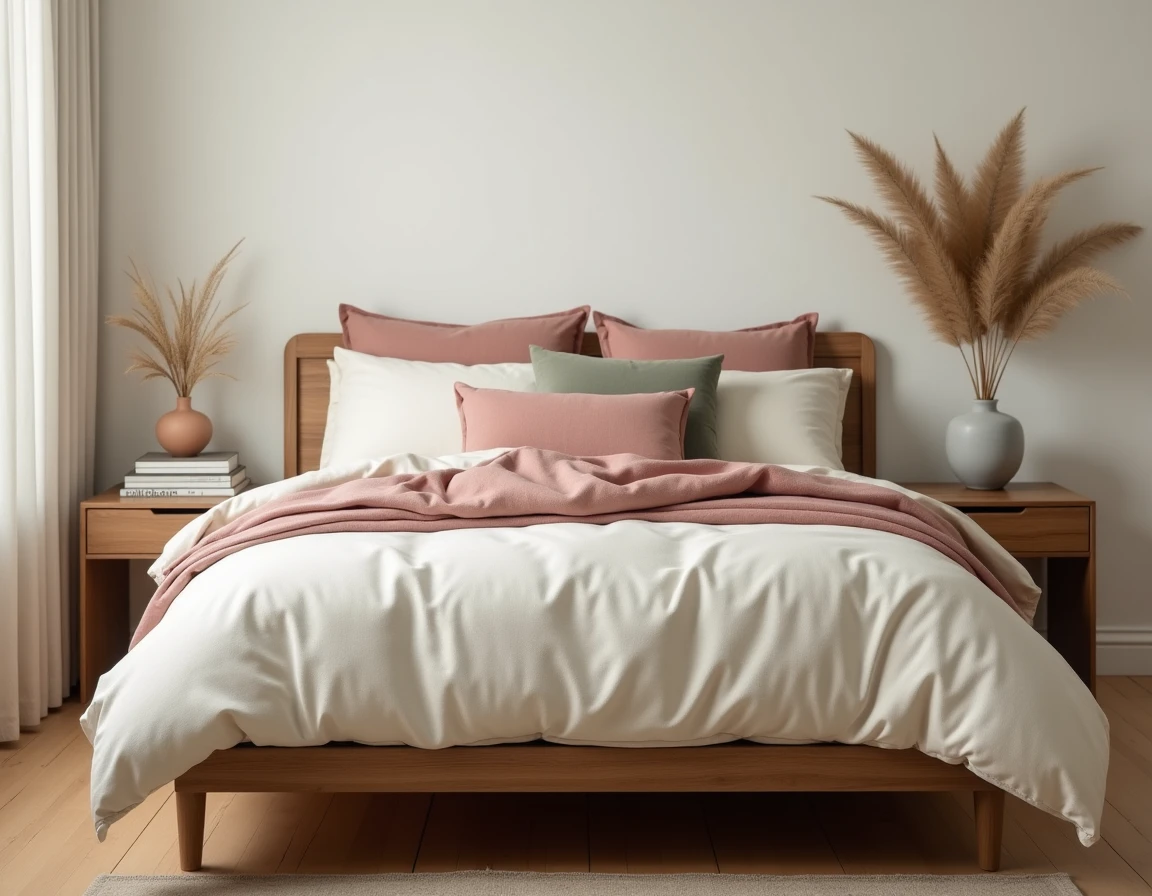
Combining a light wood floor, a tinted plaster wall, and raw linen textiles on the sofa creates a coherence of natural materials. The perceived warmth comes as much from the texture as from the hue.
Indoor plants and visual comfort: a measurable effect on ambiance
Green plants are not just a trendy accessory. They contribute to the regulation of ambient humidity and bring a living dimension that decorative objects do not replicate.
Varieties with dense foliage (ferns, pothos, calatheas) are the most effective for creating a “plant refuge” effect in a living room or dining room. Placed in terracotta or woven wicker pots, they reinforce the coherence with a palette of bio-based materials.
Three to five plants of varying sizes are sufficient to alter the perception of a standard living space. Arranging them at different heights (shelf, floor, hanging) creates a verticality that enriches the ambiance without cluttering useful surfaces.
A warm interior that lasts does not rely on a stack of accessories renewed each season. It is based on foundational choices: surface materials that naturally regulate comfort, adjustable lighting in color temperature, and a coherent palette adapted to the room’s orientation. These three levers, combined with a few well-placed plants, create a stable cocooning atmosphere that does not depend on a fleeting trend or a significant decor budget.